



Sword Dragon (with 3D animated model)
It is a dinosaur that lived during the Jurassic period, known for its unique large bony spines on its tail and spiny bone plates on its back. Relatively large in size, typically up to 9 meters in length and 4 meters in height. Jianlong is a herbivorous dinosaur that crawls on four legs, mainly supported by its forelimbs and propelled by its hind limbs. Its head is relatively small, and its jaw has teeth for cutting plants. The tail end has sharp spikes that may be used for self-defense. Fossils were first discovered in the 19th century and remain a hot topic of research for dinosaur enthusiasts and paleontologists to this day.

Dinosaur skull fossil
Plateosaurus is an ancient dinosaur from the Triassic period, which lived between 222 million and 200 million years ago. It was the first giant dinosaur to appear on Earth. Before the appearance of the Banosaurus, the largest herbivore had a body size as big as a pig, while the Banosaurus was much larger, with a body the size of a bus. It is an ancient dinosaur that lived 210 million years ago during the Late Triassic period. It has a body length of 6-8 meters, a height of 3.6 meters, and a weight of about 5 tons. According to archaeological research, it was the first giant dinosaur that lived on Earth and ate plants.

Grey whale skull
The gray whale (scientific name: Eschrichtiusrobustus) belongs to the family of gray whales in the suborder of baleen whales of the order Artiodactyla. It has a larger body circumference than species in the family of baleen whales, but smaller than the humpback whale; Its adult length is 10 to 15 meters (female whales are slightly larger than male whales), and its maximum weight exceeds 35 tons. The body is spindle shaped, with a thick and chubby trunk, thickest near the fins, and gradually narrows towards the tail. Without dorsal fins, there are 8-15 low peaks along the posterior one-third of the spine, with the first peak being the largest and decreasing towards the tail. Mainly feeds on planktonic small crustaceans, herring eggs, and other group fish. But they do not feed during their southward migration.

Fossil skull of Egyptian heavy footed beast
The scientific name of the Egyptian heavy footed beast was taken in honor of the queen of Ptolemy II, Arsinoe II, as the initial fossils were found near the ruins of her palace. The bones found here are the only complete, and the most famous species is the Qi's heavy footed beast. It is about 4.5 meters long, 2.5 meters high, and weighs about 4 tons. The most prominent feature of the Egyptian heavy footed beast is a pair of giant horns protruding from its nose. It has 44 strong teeth in its mouth, which can easily chew rough and hard plants. The Egyptian heavy footed beast evades the hunting of most predatory animals with its massive body. The era of life was approximately 37 to 23 million years ago.

Andean bald eagle skull
The Andean bald eagle is a massive bird species and one of the largest flying animals in the world. Because they are too large (weighing up to 15 kilograms at most), even a wingspan of 3 meters requires the same assistance to succeed. Therefore, this bird prefers to live in windy areas so that they can glide effortlessly in rising hot air currents. As their name suggests, Andean bald eagles are more common in mountainous areas, but some also live on coasts with strong sea winds, and even in desert areas with hot air currents. They are scavengers, so they always fly in high altitude to search for animal carcasses to feed themselves. I like to eat large animals.

Popular Models
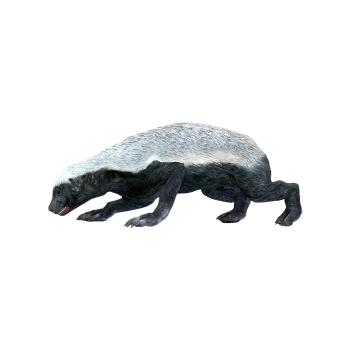
Honey Badger (3D animated model)
194 View
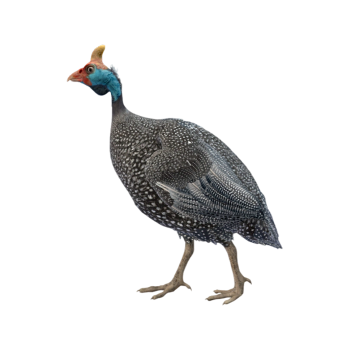
Guinea fowl (3D animated model)
165 View
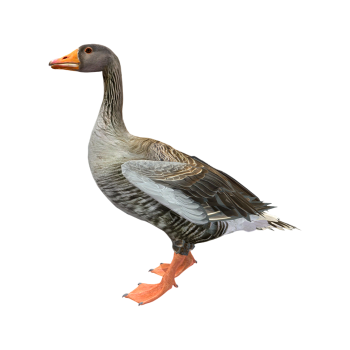
Wild Goose (3D animated model)
187 View
Red Fox (3D animated model)
155 View
Random Model

Marcus Aurelius Statue
787 View

Types of muscle tissue
577 View
Cut pumpkin
306 View

garlic
924 View



Big blue shark
1069 View